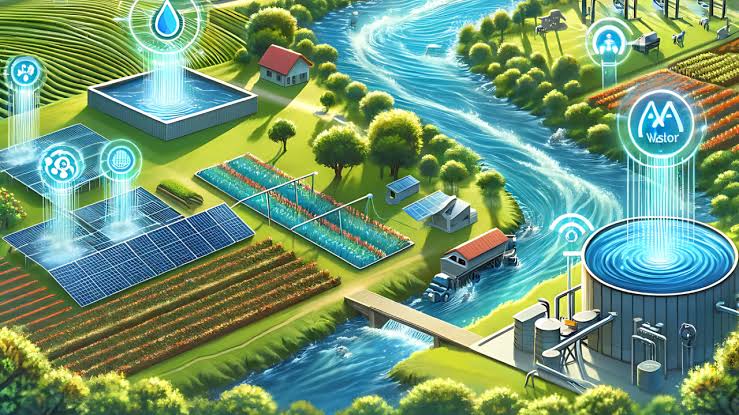
How Artificial Intelligence Is Improving Water Management and Conservation
Introduction
Water is essential for human health, agriculture, industry, energy production, and natural ecosystems. However, many regions face increasing pressure on water resources due to population growth, pollution, climate change, inefficient infrastructure, and changing rainfall patterns.
Managing water resources requires reliable information about availability, consumption, quality, and infrastructure conditions. Artificial intelligence can help water authorities, agricultural businesses, and industrial facilities analyze this information and make better decisions about water use.
Detecting Water Leaks
Water distribution networks often include extensive underground pipes that may develop leaks because of aging materials, pressure changes, corrosion, or physical damage. Undetected leaks can waste large quantities of treated water and increase operating costs.
AI systems can analyze pressure measurements, flow rates, acoustic information, and historical maintenance records to identify unusual patterns. These patterns may indicate that a section of a water network requires inspection.
For example, if water flow remains unusually high during periods when consumption should be low, an intelligent monitoring system may alert maintenance teams. Workers can then investigate the affected area and locate possible leaks.
Improving Water Demand Forecasting
Water demand changes depending on population activity, weather, seasons, industrial production, and agricultural requirements. Water providers need reliable forecasts to plan treatment, storage, and distribution.
AI models can analyze historical consumption, temperature, rainfall, and other variables to estimate future demand. These predictions can help water utilities prepare for periods of increased consumption and organize available resources more effectively.
Better forecasting can also support long-term infrastructure planning by helping authorities understand how demand may change as cities grow.
Supporting Agricultural Irrigation
Agriculture is a major user of freshwater in many regions. Traditional irrigation methods may apply more water than crops need, especially when irrigation schedules do not account for changing soil and weather conditions.
AI-powered agricultural systems can analyze soil moisture sensors, weather forecasts, crop information, and satellite images to help estimate irrigation requirements.
For example, an intelligent irrigation system may recommend reducing watering when recent rainfall has already provided sufficient moisture. It may also identify areas of a field where soil conditions differ and require different irrigation levels.
These applications can help farmers use water more efficiently while maintaining suitable growing conditions.
Monitoring Water Quality
Water quality monitoring is essential for protecting public health and aquatic ecosystems. Water treatment facilities and environmental authorities must monitor factors such as temperature, acidity, turbidity, and chemical or biological indicators.
AI can analyze measurements from monitoring equipment and identify changes that may require further investigation. It can also help organize historical information and identify recurring patterns in water quality.
Automated analysis should support established laboratory testing and environmental monitoring procedures. Important safety decisions require verified measurements and qualified professional assessment.
Improving Wastewater Treatment
Wastewater treatment facilities must remove pollutants and manage complex biological and chemical processes. Treatment efficiency can be influenced by incoming water characteristics, temperature, equipment condition, and operating settings.
AI systems can analyze sensor information and recommend adjustments to certain treatment processes. They may help operators identify unusual equipment performance, predict maintenance requirements, and optimize energy consumption.
These improvements can support more reliable treatment while reducing unnecessary operational costs.
Supporting Flood Prediction
Floods can damage homes, roads, businesses, agricultural land, and public infrastructure. Predicting flood risk requires information about rainfall, river levels, soil conditions, drainage systems, and geographic characteristics.
AI can combine these datasets to identify patterns associated with potential flooding. Authorities may use the results to prioritize inspections, prepare emergency resources, and communicate warnings.
Predictions remain uncertain and should be combined with hydrological expertise, official monitoring systems, and emergency management procedures.
Improving Industrial Water Efficiency
Factories and industrial facilities use water for cooling, cleaning, processing, and manufacturing. AI can analyze consumption patterns and identify production stages where water use may be unnecessarily high.
Companies can use these insights to investigate leaks, improve recycling processes, and adjust equipment settings. Reducing industrial water consumption can lower operating costs and support environmental sustainability.
Conclusion
Artificial intelligence can contribute to better water management by detecting leaks, forecasting demand, improving irrigation, monitoring quality, optimizing wastewater treatment, and supporting flood preparation. These applications can help conserve freshwater resources and improve infrastructure reliability. Their effectiveness depends on accurate data, well-maintained equipment, scientific validation, and responsible water management policies.